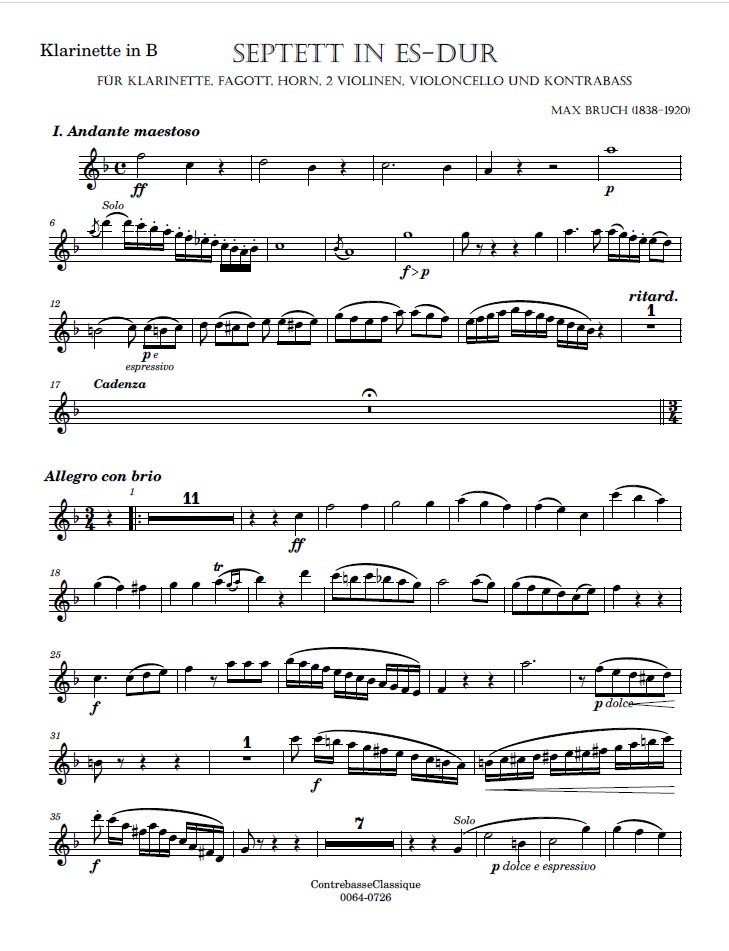
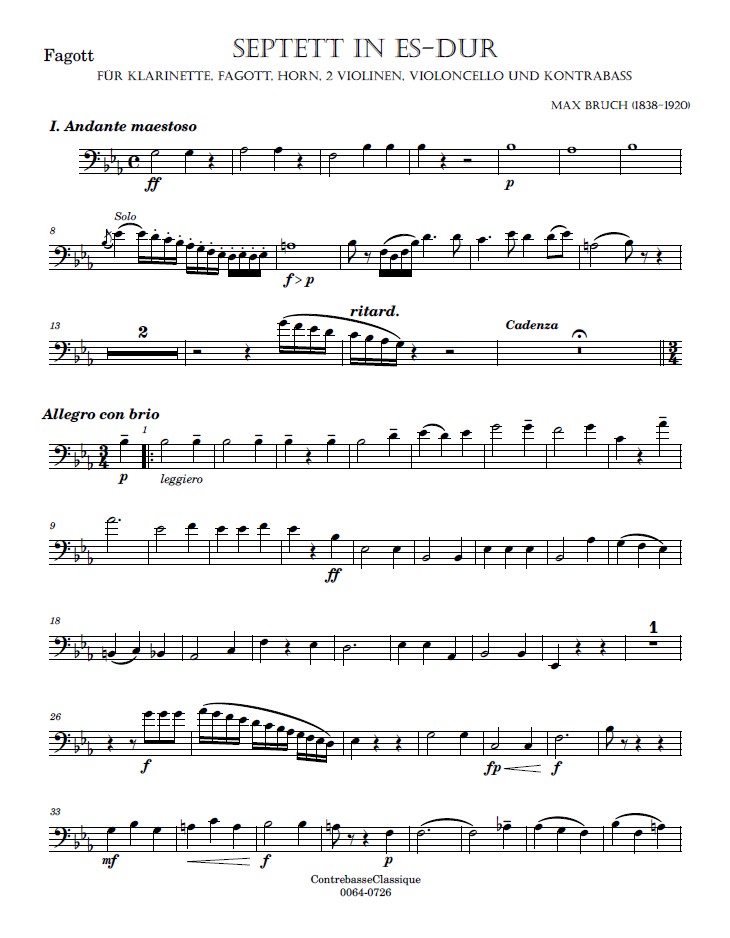
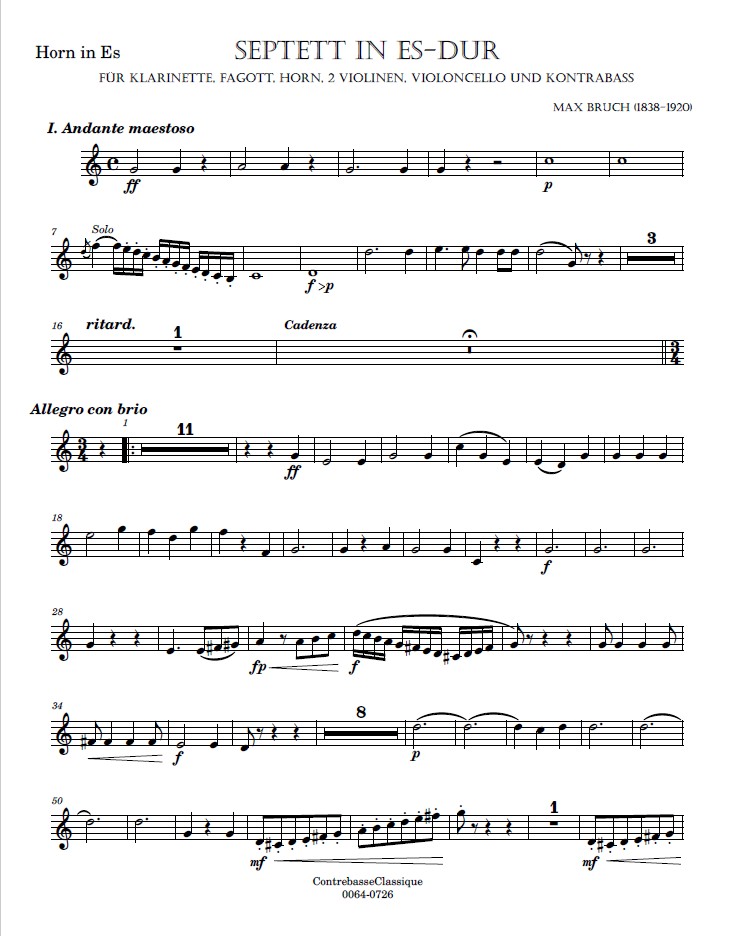
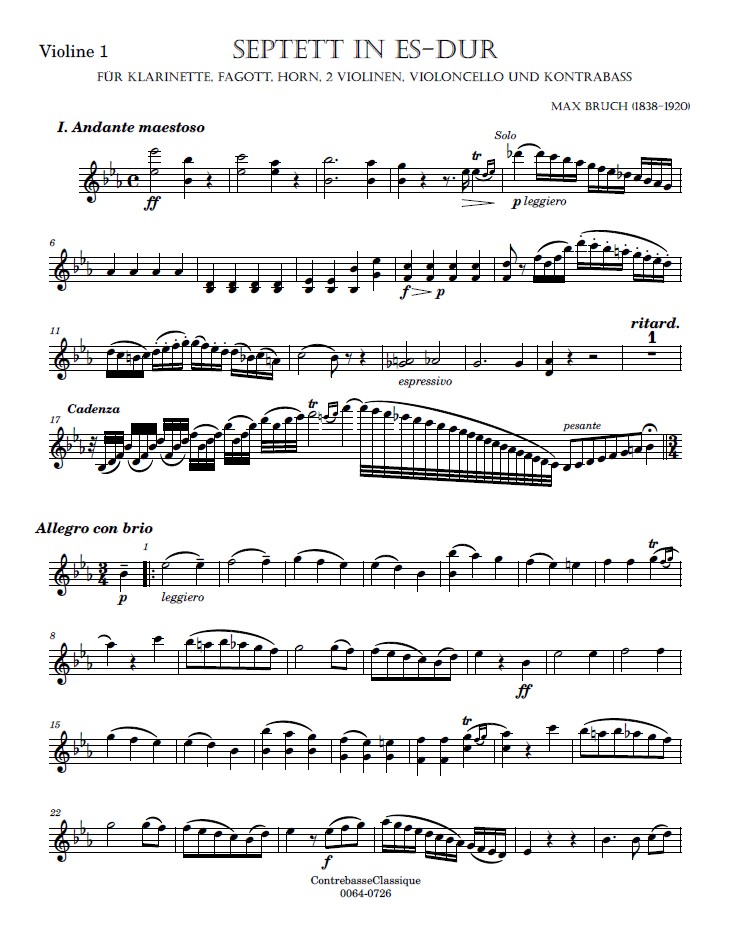
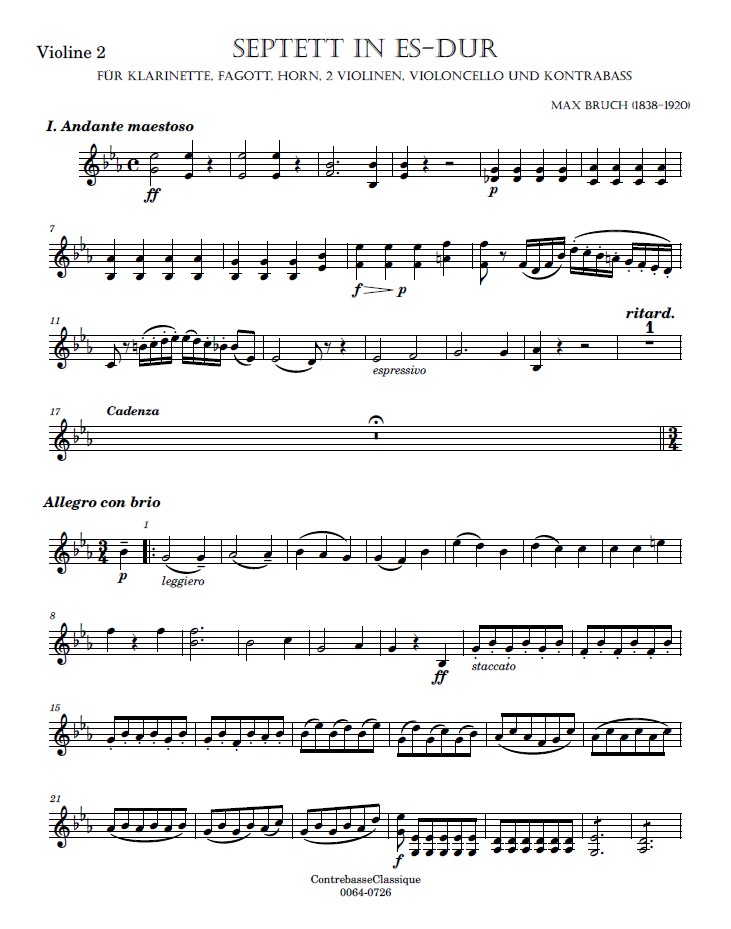
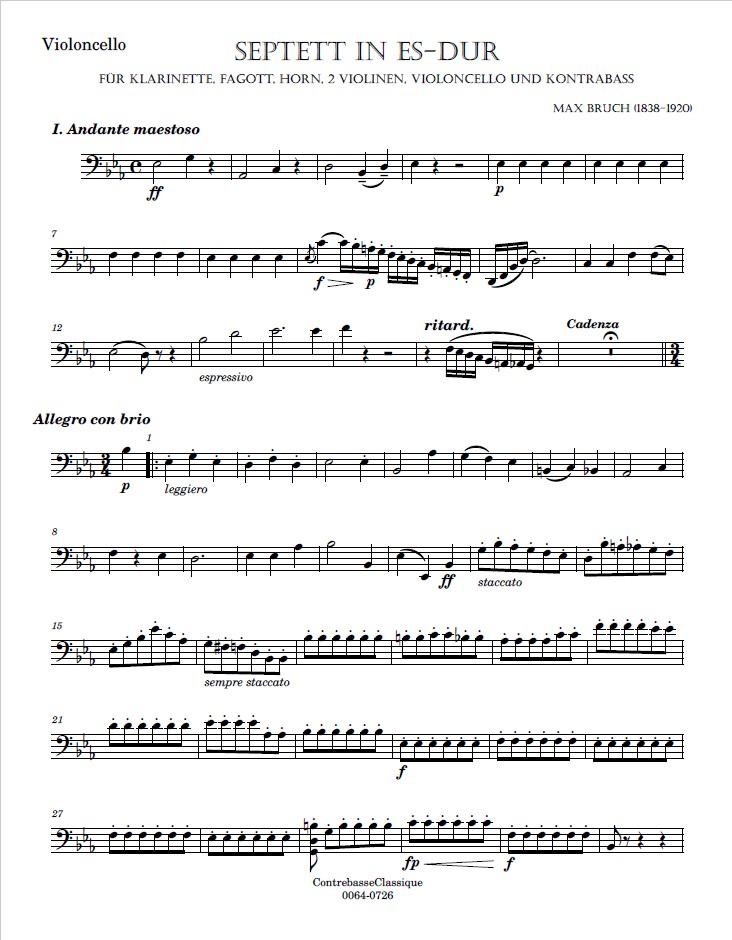
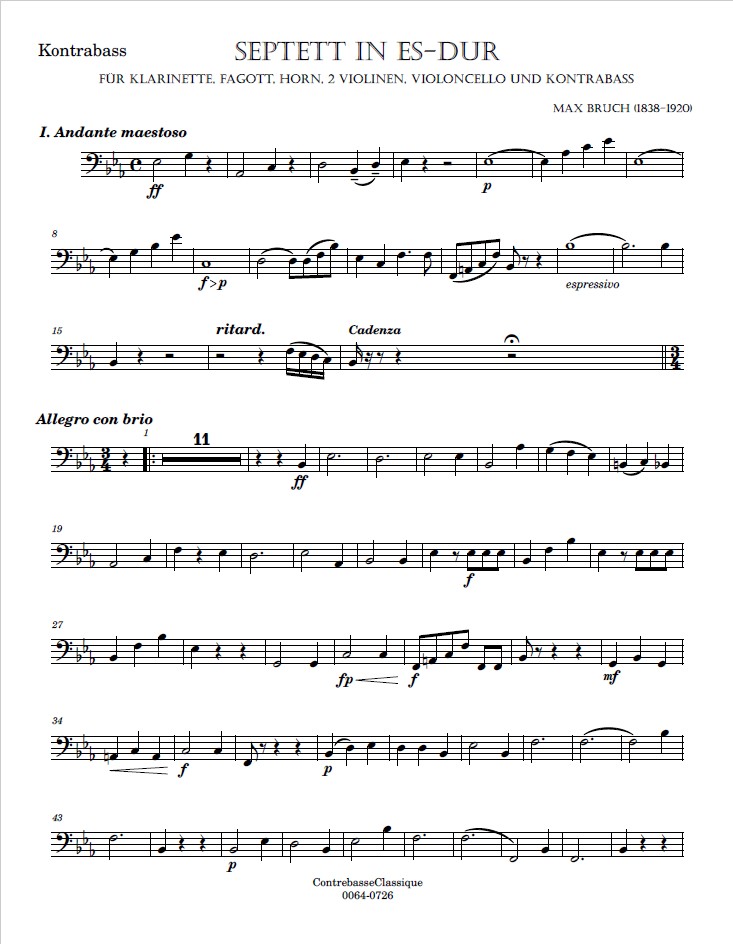
Description
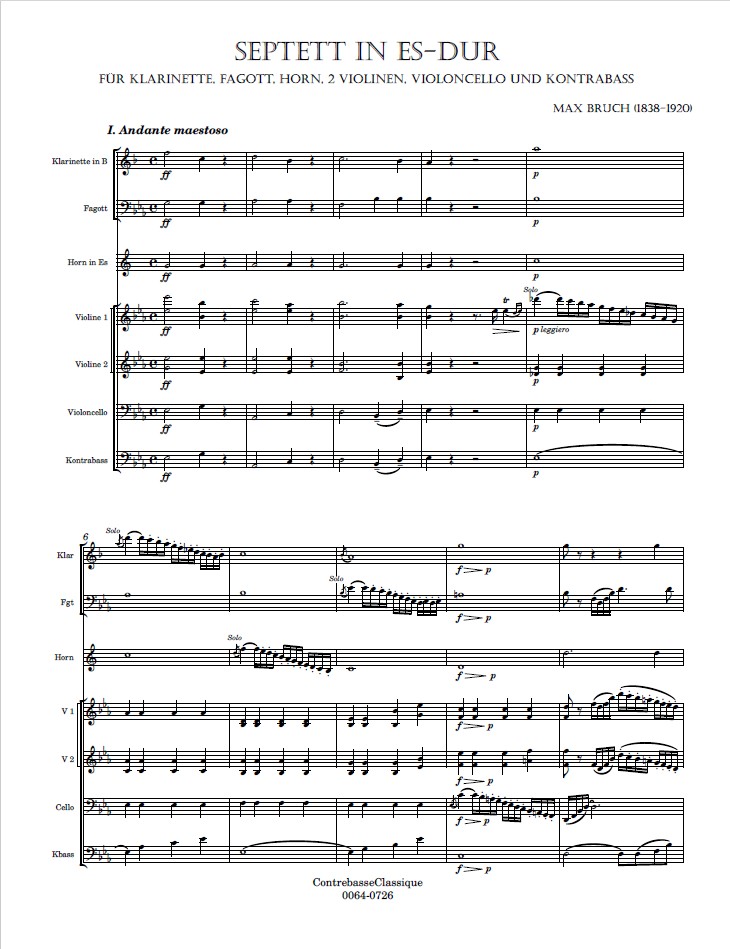
Septet, op. posth.
Septet for winds and strings (1849)
Product details:
- Composer: BRUCH, Max (1838-1920)
- Format: high-resolution digital PDF (printable)
- Instrumentation: clarinet, bassoon, horn, 2 violins, violoncello and double bass
- Number of pages (score): 53
- Number of movements: 4
- Special features of this score: The Septet in E-flat major, Op. posth. is one of the most remarkable curiosities in the output of Max Bruch. What makes it extraordinary is that Bruch composed it in 1849, when he was only 10 or 11 years old. Although it remained unpublished during his lifetime and therefore carries the designation Opus posthumous, it is a substantial and surprisingly accomplished work. This unusual combination is closely related to the tradition established by Ludwig van Beethoven in his famous Septet in E-flat major, Op. 20, although Bruch omits the viola and uses two violins instead. For double bass players, the work is particularly interesting because the bass is not merely a harmonic foundation. Bruch gives it an active and often melodic role, foreshadowing his lifelong affection for rich sonorities in the lower register.The influences of the German Romantic tradition are evident, especially those of Felix Mendelssohn and Robert Schumann, composers whom Bruch admired throughout his life. What is striking is the craftsmanship. Listeners unfamiliar with the work are often astonished to learn that it was written by a child. One reviewer remarked that the handling of the instruments sounds remarkably assured and that the melodic flow already resembles Bruch’s later music.The Septet remained unpublished during Bruch’s lifetime and was rediscovered only much later among his manuscripts. It is therefore catalogued as Op. posth. (posthumous work). Today it occupies a special place in his chamber music output as his earliest surviving large-scale chamber composition. For performers and listeners alike, the Septet is not merely a juvenile curiosity. It is a charming, melodious, and expertly crafted chamber work that provides an early glimpse of the musical personality that would later produce some of the most beloved works of the German Romantic repertoire.
Why choose this score?
- A unique work in the chamber music repertoire
- Clear, readable file, ready to print or use on a tablet
- Immediately available after purchase